
Book demo
Book a personalized one-on-one demo of our platform and discover how Mevisio can help you create custom boards, streamline your business operations, and empower your team to work more efficiently.


Most manufacturers have a shop floor management system. Very few of them designed it.
What they have instead is something that evolved: a mix of whiteboards updated once per shift, spreadsheets nobody fully trusts, morning meetings that run long and resolve little, and escalation paths that depend on whoever happens to be standing nearby when something goes wrong.
It works until it doesn't. And when it doesn't, the symptoms look like chronic overtime, recurring quality issues, and a leadership team that's always reacting instead of improving.
This guide breaks down what shop floor management actually is, why most implementations fall short, and what a well-designed system looks like in practice.
Shop floor management is the operational system that gives a production team real-time visibility into performance, with a clear and structured process for fixing what's off track.
At its core, it answers three questions every shift:
If your current system can answer all three consistently, in under 15 minutes, at every level of the organization, it's working. If not, there's a gap somewhere in the structure.
A well-functioning system operates across three levels. Most manufacturers have some version of each, but they're often disconnected from each other.
This is the gemba, where the actual work happens. Operators need to know their targets, log deviations as they occur, and escalate issues they can't resolve themselves. This layer fails when deviation logging is manual, delayed, or skipped entirely because "it doesn't change anything anyway."
Supervisors run the daily huddle. They review the board, identify patterns, assign countermeasures, and follow up. This layer fails when the data isn't current. Leaders spend 10 minutes arguing about whether a number is correct instead of deciding what to do about it.
Plant managers and production directors need a consolidated view across lines, shifts, and departments. Tiered meetings, from floor to management, are how insights travel upward and decisions travel down. This is what makes continuous improvement sustainable at scale. Without it, problems stay trapped at the floor level and strategic priorities stay trapped in the boardroom.
The tools aren't the problem, at least not at first. The problem is that most shop floor management systems are built for documentation, not decision-making.
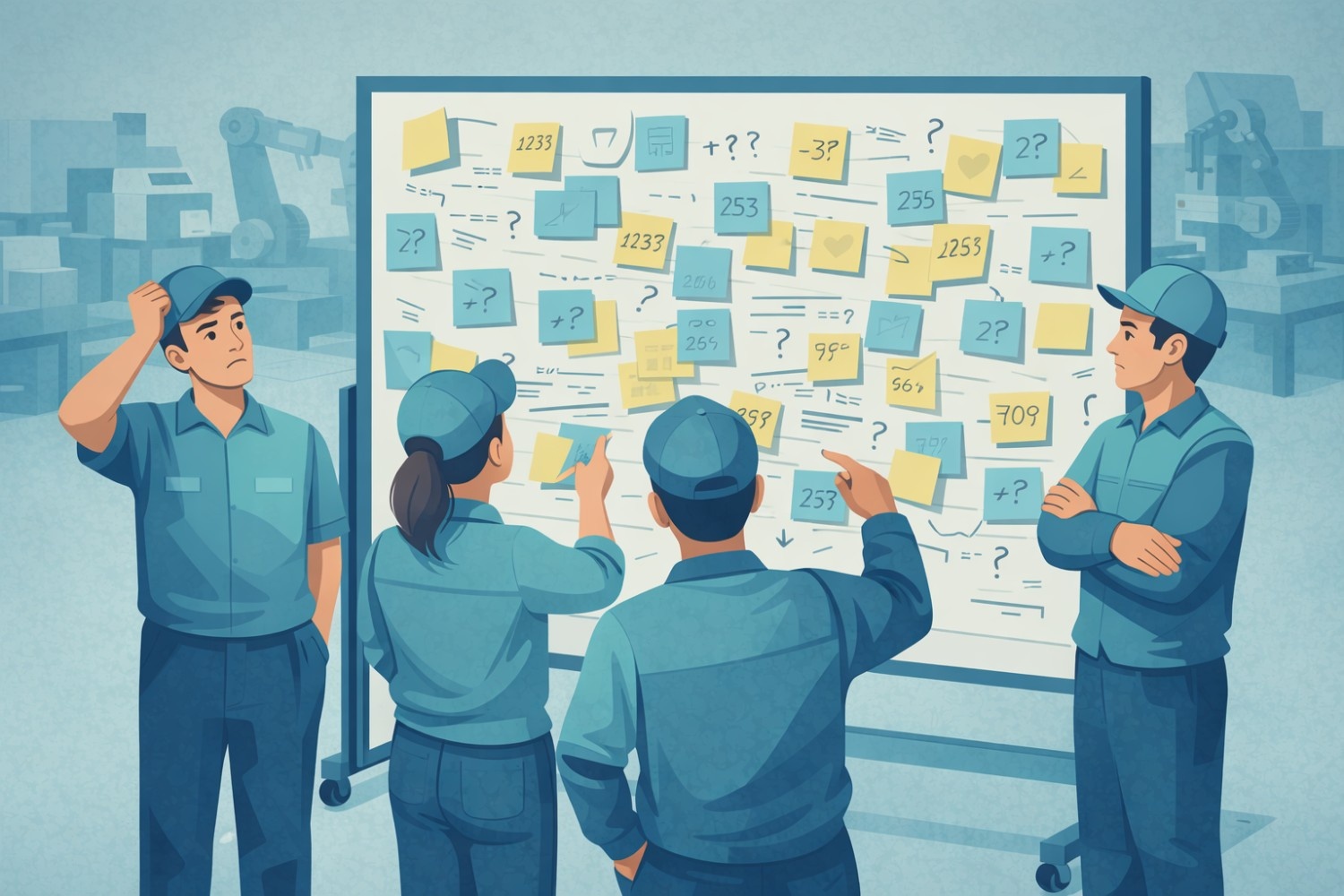
A whiteboard gets updated once per shift. By the time the morning meeting starts, the data is already stale. People default to discussing what happened rather than what to do next. The meeting becomes a reporting ritual, and slowly, people stop taking it seriously.
There are a few root causes that show up repeatedly:
Delayed data. If operators manually enter numbers into a spreadsheet that gets checked once a day, you don't have a management system. You have a retrospective. By the time you see the deviation, the shift is over and the opportunity to respond is gone.
No structured escalation. When something goes wrong, there should be a clear path for it to reach the right person at the right level. Without that structure, problems get resolved by whoever is nearby, or they don't get resolved at all.
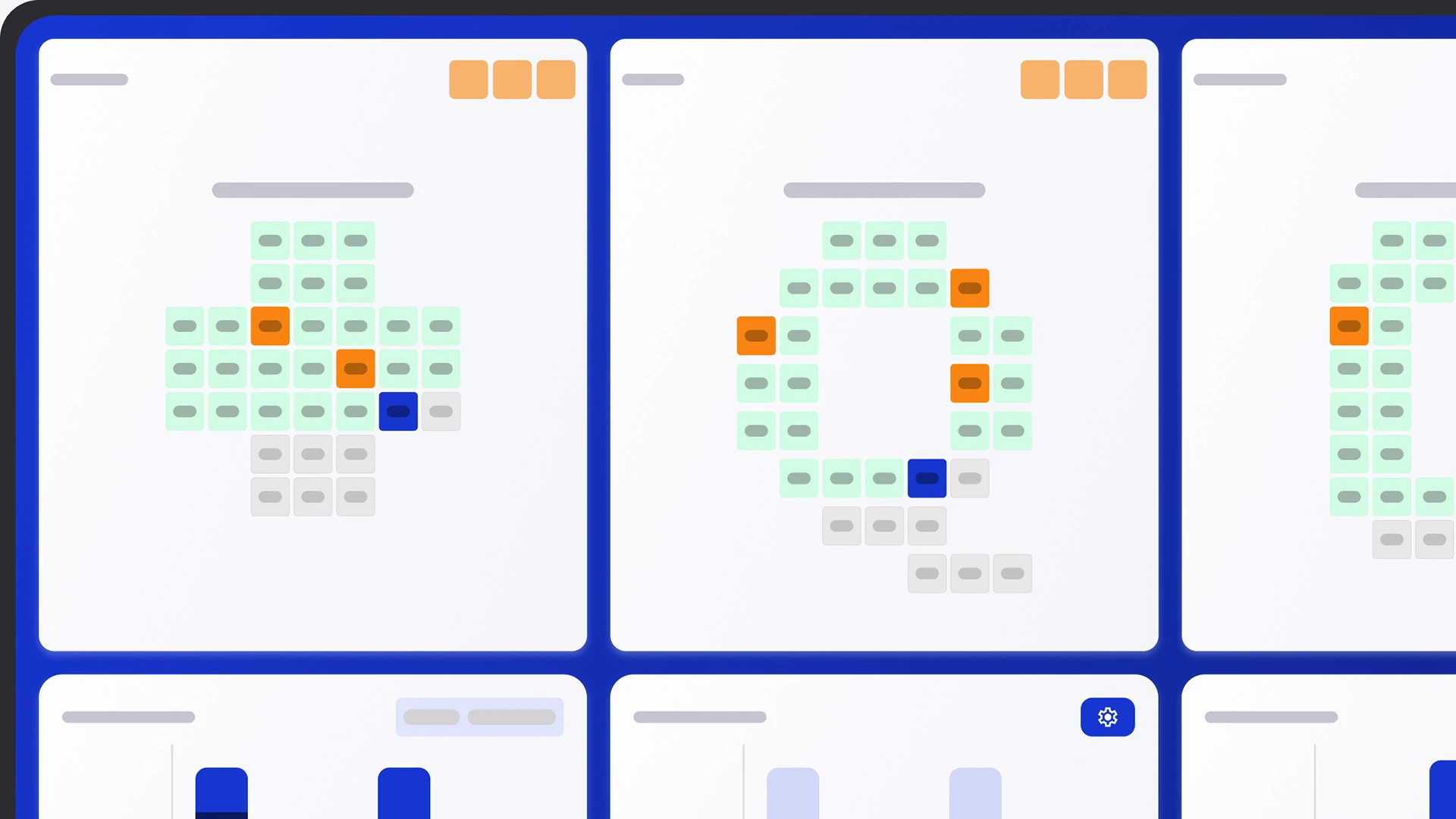
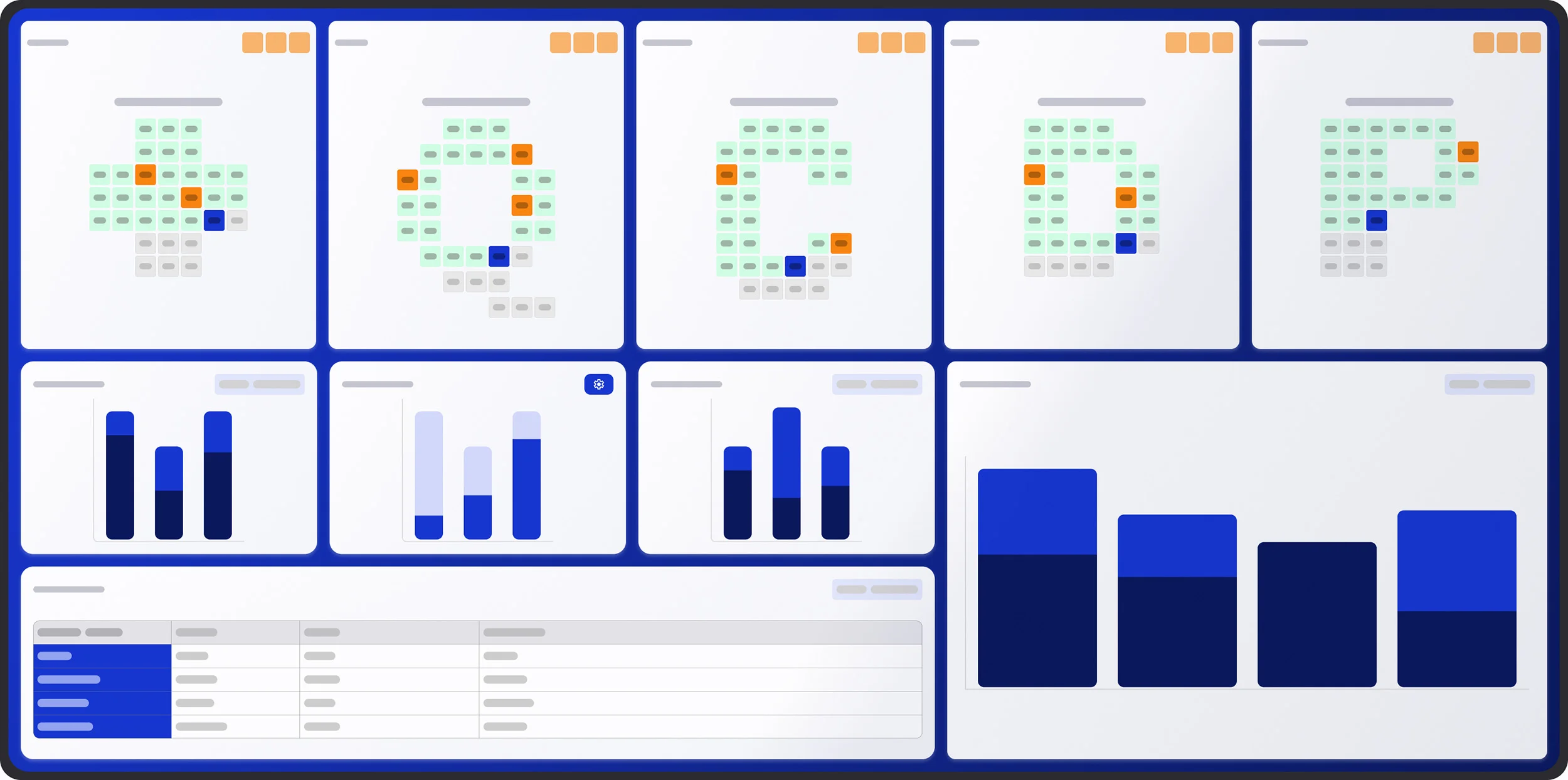
Disconnected tracking. Quality issues in one system, production output in another, maintenance requests in a third. Nobody has the full picture. The SQCDP board was designed to solve exactly this, with Safety, Quality, Cost, Delivery, and People visible in one place. But many plants still run each pillar in isolation.
Meetings without ownership. A deviation gets raised. Everyone nods. Nobody is explicitly assigned to fix it. Next meeting: same deviation, same nods. This is how daily huddles die, not with a bang, but with a slow drift into irrelevance.
Lean gives us the framework. Visual management, SQCDP, standard work, tiered meetings, kaizen. These aren't separate tools. They're a system that only works when they're connected.
Here's what a mature Lean shop floor management system looks like in practice:
Visual management that's actually current. Every board shows live data. If someone has to ask "is this up to date?", the system has already failed. Production output, downtime, quality rejections, and delivery status should be visible at a glance, without asking or hunting.
A daily huddle that drives action, not reporting. The meeting starts on time, runs no more than 15 minutes, and ends with clear owners for each open issue. The board drives the agenda. When this works well, the meeting is almost boring. No surprises, because the team caught deviations as they happened.
Tiered meetings that connect the floor to strategy. Line-level huddles feed into department-level reviews, which feed into plant-level management reviews. Information flows up, priorities flow down. This is the structure that makes improvement compound over time rather than reset with every shift change.
Kaizen embedded in routine. Continuous improvement isn't a separate project. It's a habit built into the daily system. Operators raise issues, issues get categorized, high-frequency problems trigger kaizen events.
For most of manufacturing history, shop floor management was physical: magnetic boards, printed shift reports, handwritten status updates. That worked when plants were smaller, product mixes were simpler, and a 24-hour feedback loop was acceptable.
That's not the environment most manufacturers operate in today.
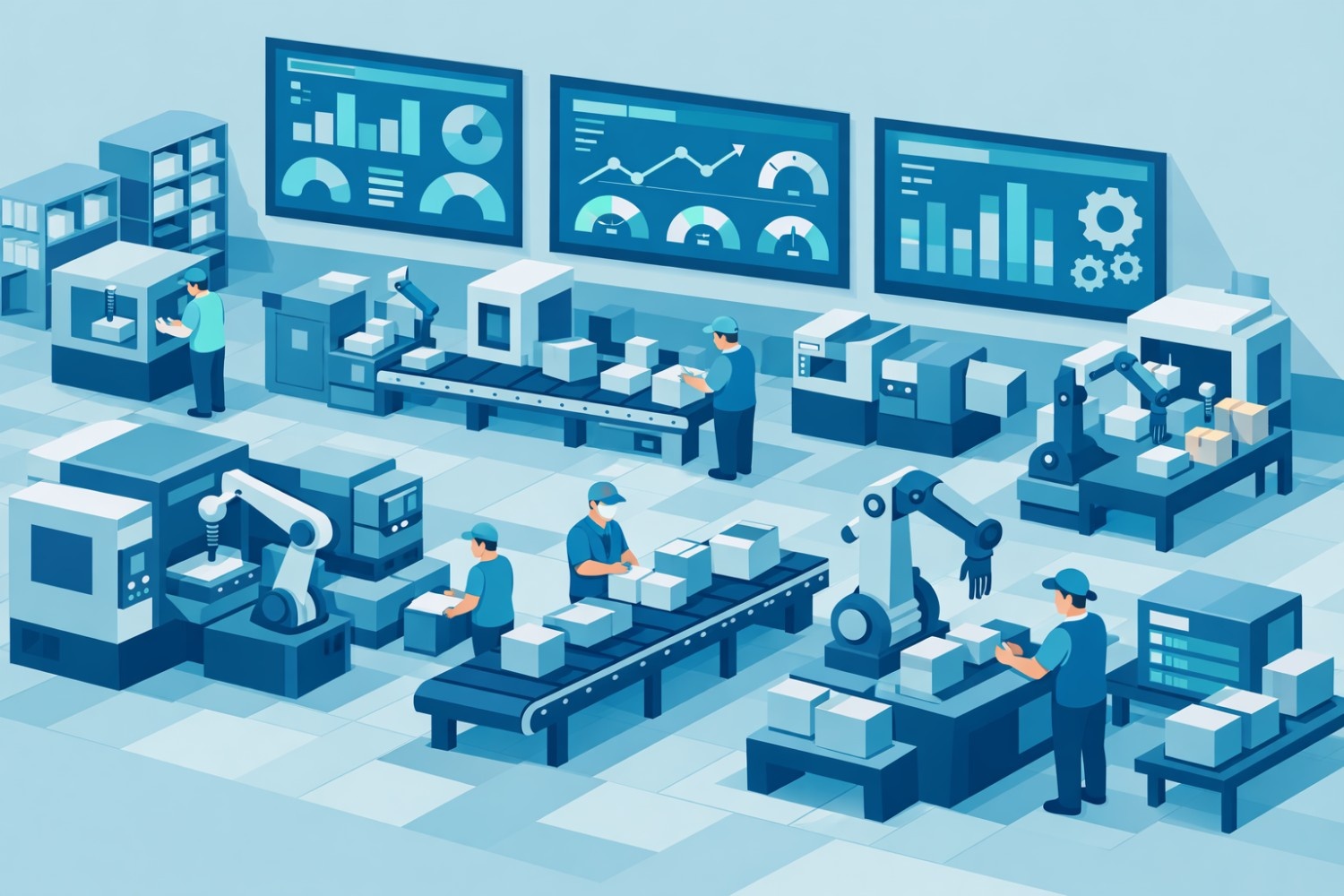
Digital shop floor management systems don't replace the Lean principles. They make them work better. A digital SQCDP board connected to your ERP means production numbers are live from the moment a shift starts. Deviations logged by an operator appear instantly on the supervisor's screen. Kaizen actions have owners, deadlines, and status, visible to everyone across every shift.
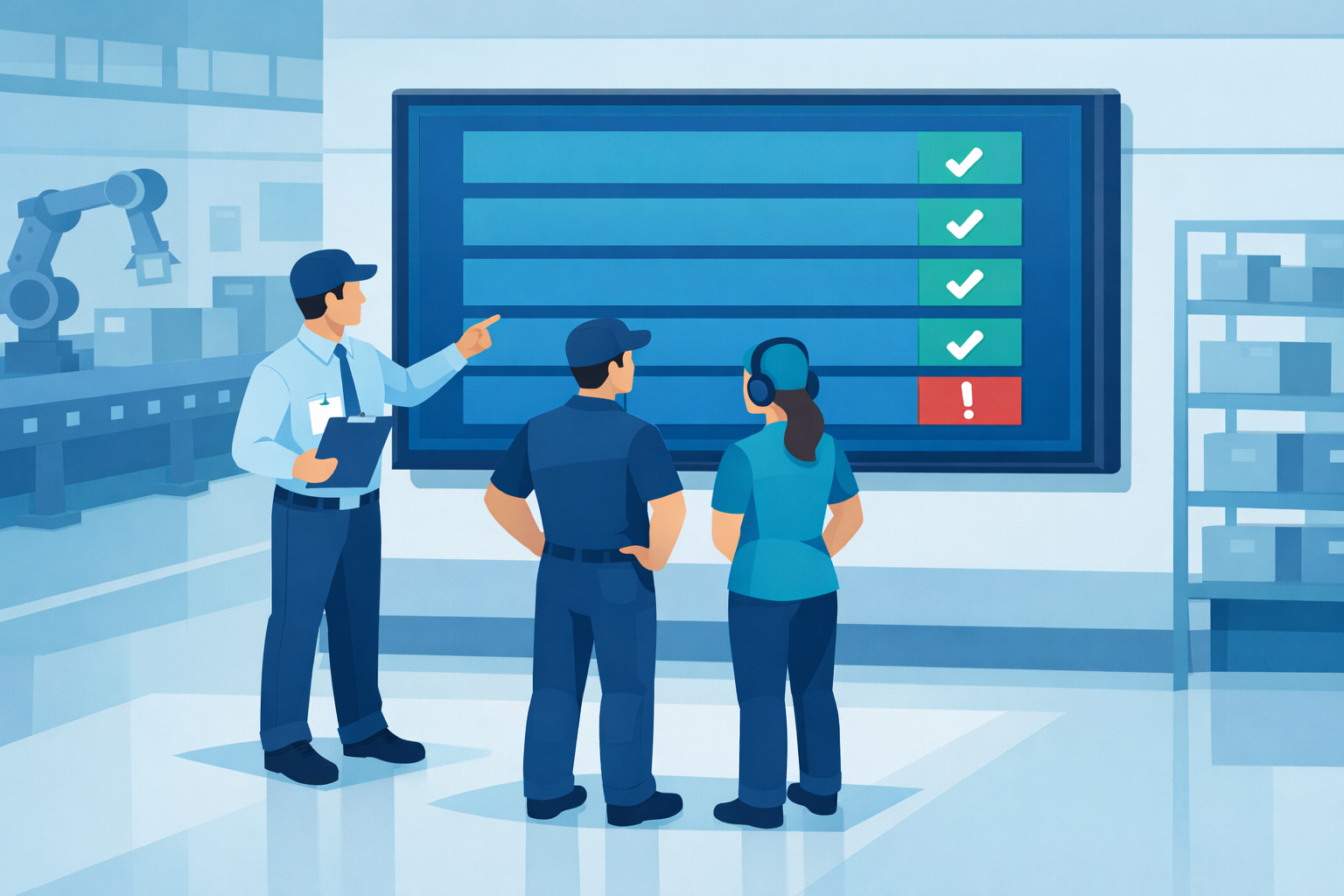
The best implementations share a few things in common:
When Fläkt Group digitized their daily management system with Mevisio, the shift wasn't just in the tools. Daily huddles stopped being about verifying numbers and started being about solving problems, because the data was live, visible, and owned by the team running the meeting.
Even with the right intent, shop floor management rollouts fail in predictable ways.
Starting with the software, not the process. A digital board won't fix a broken meeting structure. Before you digitize, define what a good daily huddle looks like, what gets escalated and how, and what "resolved" actually means. One plant went live with Mevisio before answering these questions and ended up with a digital version of the same dysfunctional meeting they had before.
Too many metrics. SQCDP works because it's focused. When plants add 15 KPIs to a board, nothing gets priority. Everything is equally urgent, which means nothing is. Start with the five that matter most per area, then expand once the routine is solid.
Losing the supervisor layer. Shop floor management lives or dies at the team leader level. If supervisors see the board as a reporting obligation rather than a decision-making tool, the system won't stick regardless of how good the software is.
Treating go-live as the finish line. The first 90 days are about coaching the new routines: running huddles correctly, using the data, building the escalation habit. That's where most of the value is created, and where most implementations lose momentum.
Shop floor management is what happens between shifts. It's the structure that makes improvement possible rather than accidental. When it works, deviations get caught early, meetings drive action, and continuous improvement compounds over time. When it doesn't, factories spend enormous energy running in place.
The Lean principles are solid. The digital tools to support them have matured significantly. The gap, for most manufacturers, is the transition from a system that evolved to one that was designed.
That's exactly the transition Mevisio is built to support. If you want to see what it looks like in your environment, we're happy to show you.



View all blogs